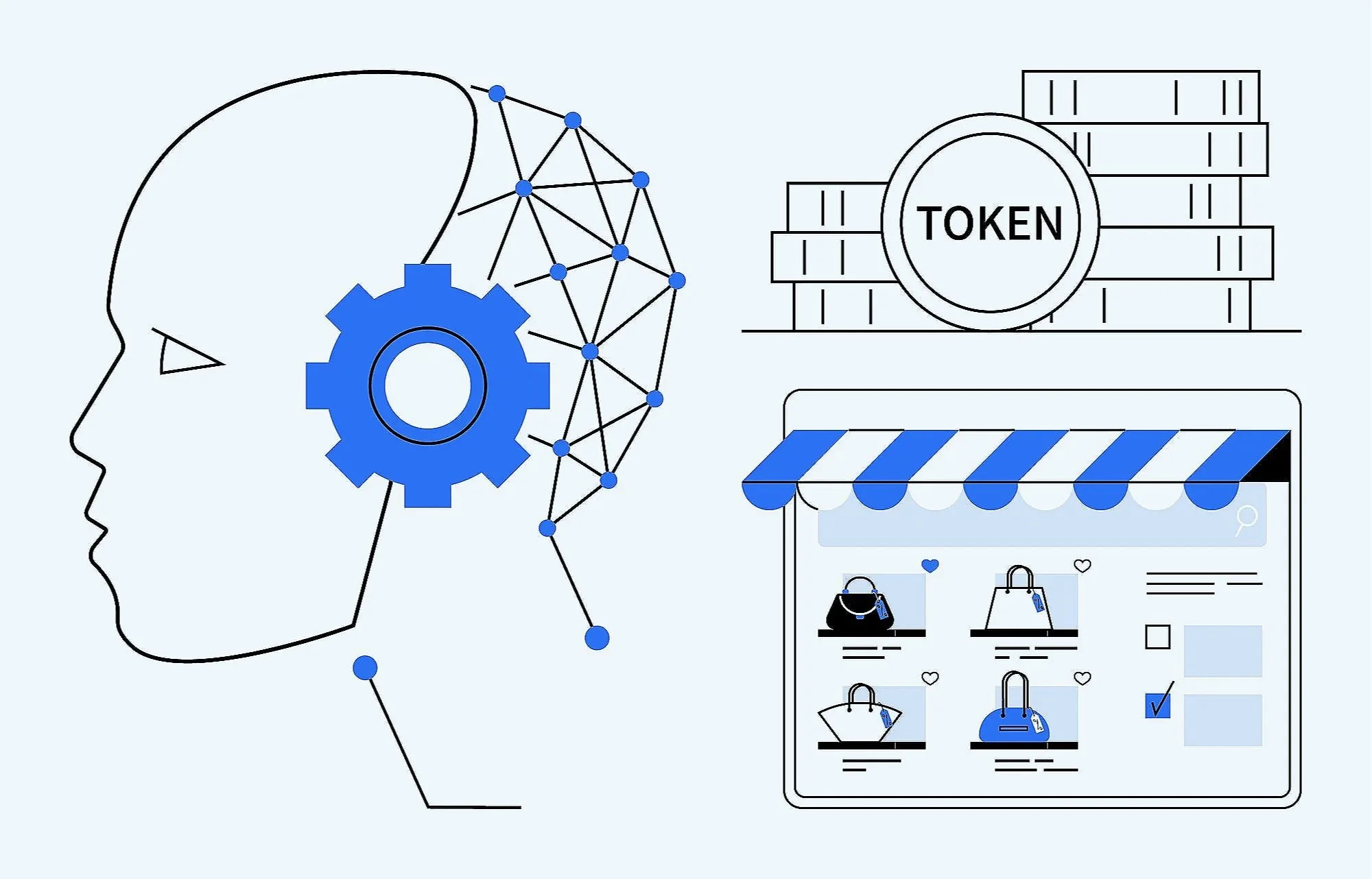
The primary drivers behind BPO decisions haven't changed dramatically: cost reduction, access to specialized talent, scalability, and the ability to focus internal teams on core business. What has changed is how AI reshapes the calculus on each of these.
Read MoreEvery time your organization deploys an AI system, a critical decision gets made — usually by a developer, sometimes by a vendor, rarely by anyone with accountability for the outcome. That decision is: what kind of AI are we using? And in most enterprises today, the honest answer is: we don't actually know, and we don't have the language to find out.
Read MoreIt's good work. Five forces - technology, economics, geopolitics, demographics, climate - each with their own core shifts and key uncertainties.
The work isn’t prediction. It’s perseverance. It’s staying with the complexity long enough to recognize patterns instead of imposing them. It’s building systems that make it easier for the parent with the 13-point cognitive tax to access the same quality of care, information, and decision-support as the investor reading Amy Webb’s report at $10,000 a seat.
That’s not a technology problem. It’s not even an AI problem. It’s a recognition problem — who we see, what we count, and whether we’re willing to build for the ground conditions that already exist instead of the convergence we hope is coming.
Read MoreBut generative AI is clearly changing the process of data analysis. I’ve been experimenting with quantitative data analysis using ChatGPT for several years now. I was certainly impressed by the LLM’s ability to generate Python code to analyze structured data and create machine learning models.
Read MoreI’m reading Jill Lepore’s book If/Then about the origins of analyzing human behavior data with computers. One interesting aspect of it is the automation paranoia arising from the introduction of the IBM 704 mainframe computer in 1954 (the year I was born). The book even includes an image from an automation-focused campaign leaflet for John F. Kennedy’s 1960 presidential campaign—see it above.
Read MoreAs the common logic goes, a smooth road can make you sleepy. A bumpy road keeps you alert. Organizations are increasingly deploying AI to automate discrete activities and sub-processes. Examples are AI copilots that draft, summarize, and decide, and increasingly, AI agents that execute multi-step work with minimal human input. The cumulative logic is irresistible: less friction at each step means faster throughput and higher productivity for all.
Read MoreArtificial intelligence is changing cybersecurity faster than most companies expected. It is helping security teams catch threats earlier, sort through overwhelming volumes of alerts and respond more quickly. But it is also making life easier for attackers, who can now produce more convincing phishing emails, better impersonation scams and more targeted attacks at much greater scale. This is what makes the current moment so important. AI is not just improving cybersecurity tools. It is changing the nature of the fight itself.
Read MoreQuantum computing stands at an intriguing but early stage of development. The technology is advancing, and there are credible signs of progress across hardware, algorithms, and ecosystem readiness. However, the leap from controlled pilots to mainstream enterprise adoption remains substantial. For now, quantum computing is best understood not as an immediate disruptor, but as a strategic, long-term investment—one that organizations should monitor closely, experiment with cautiously, and prepare for thoughtfully.
Read MoreAfter years of anticipation, quantum computing is no longer a distant promise. It has moved decisively into the center of the technology conversation, joining artificial intelligence as one of the defining breakthroughs of recent years. The shift has been driven by an acceleration in scientific progress and a surge in corporate investment that has pushed quantum computing from a laboratory experiment to a strategic priority.
Read MorePricing is one of the most important decisions for organizations and individuals. We may pay 20 dollars for a glass of wine in a restaurant while the same bottle costs the same at a grocery store. The liquid is identical. The value is not. We are paying for context, service, timing, and experience. Price is not a static number. It is a quantified expression of perceived value at a particular place and time.
Read MoreDigital infrastructure serves as the foundation for national security, the economy, and everyday life in today’s hyper-connected world. Artificial intelligence (AI) and quantum computing are examples of emerging technologies that inspire creativity. However, these technologies also magnify risks posed by sophisticated attacks, black swans, gray swans, economic volatility, and geopolitical tensions. At this point, resilience—the ability to anticipate, endure, and recover from disruptions—is absolutely necessary.
Read MoreA great deal has been written about readiness for artificial intelligence (AI). In Factors influencing readiness for artificial intelligence: a systematic literature review, the authors examined 52 papers to study AI readiness factors.
Read MorePeople outside regulated industries often assume the hardest part of the job is making the right decision. In practice, the harder part is explaining that decision later to someone who was not there, does not know the context, and is paid to be skeptical.
Read MoreOver the past two years, enterprises have rapidly adopted AI copilots, chatbots, and assistants across support, IT, and customer-facing workflows. Early results have been promising. Teams report faster answers, reduced manual effort, and incremental productivity gains.
Read MoreThis is the season of holiday overeating and over-drinking—despite the fact that moderate consumption of food and alcohol is widely believed to lead to a better life. Although I sometimes agree with Oscar Wilde in advocating “moderation in all things—including moderation,” I am beginning to think that AI—particularly the generative variety—is no different than food, alcohol, or other good things that become problematic when used excessively.
Read MoreThe technology that dazzled in a controlled environment struggles to deliver consistent value when deployed across the enterprise. This is not a technology problem. It is an architecture problem. And until executives recognize the difference, organizations will continue investing millions in AI capabilities that never achieve meaningful scale.
Read MoreThe most extreme version of strategic AI is found in a small but growing number of companies might be described as “all in on AI” or “AI first.” These companies are aggressively pursuing strategic returns on their AI investments. They are using the technology to enable new strategies, new business models, and dramatically new ways of performing their business processes. While they represent a low percentage of companies, they are providing trailblazing examples for the majority of companies that are more conservative.
Read MoreOver the past eighteen months, corporate language shifted from curiosity about AI to impatience with results. Adoption is widespread. Enterprise impact is not.
McKinsey’s State of AI 2025 found that about 88% of companies now use AI in at least one function and 62% are experimenting with AI agents. Only around 23% report scaling an agentic system somewhere, with single-function scaling rarely breaking into double digits. Only 39% report enterprise-level EBIT lift.
Read MoreBusinesses today face a broader range of risks than ever before. Ongoing geopolitical crises, such as the Russia-Ukraine conflict, along with the adoption of advanced technologies like AI, have created numerous new challenges for companies seeking to operate securely and effectively.
Read MoreHealthcare’s inefficiencies are not moral failures; they’re architectural ones.
Nearly $400 billion in annual administrative waste³.
43 percent of patients waiting more than two weeks for claims settlement³.
55 percent growth in Medicare Advantage denials in a single year³.
These numbers don’t reflect bad intentions—they reflect systems designed for file exchange, not reasoning.
Read More